










Building Mental Strength: Noah Chadwick’s Path to Professional Hockey
Mar 19
2026
By Hockey Saskatchewan
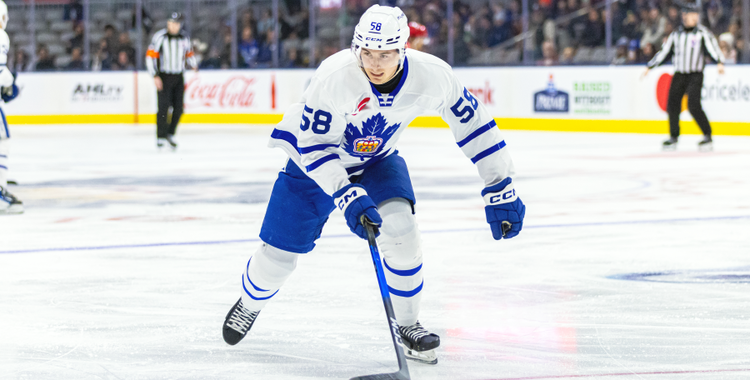
For athletes, the path to being a professional is rarely linear. Few understand this better than Noah Chadwick, whose journey from Saskatchewan rinks to the American Hockey League’s Toronto Marlies is a testament to perseverance, mental performance, and a love for the game.
To the 20-year-old Saskatoon product, the sport has always been about more than just competition.
“Hockey is supposed to be fun. At the end of the day, it's a game we all love to play … If I wanted to wake up at 6:00 a.m. and go to practice at 7:00 a.m., that was my own choice. It was up to me, and I did it because I enjoyed it,” Chadwick said.
“I met some amazing people and had a lot of fun in minor hockey. Having [team] support to do it, and to enjoy it without that stressful environment when I was young. That was definitely the biggest piece for me.”
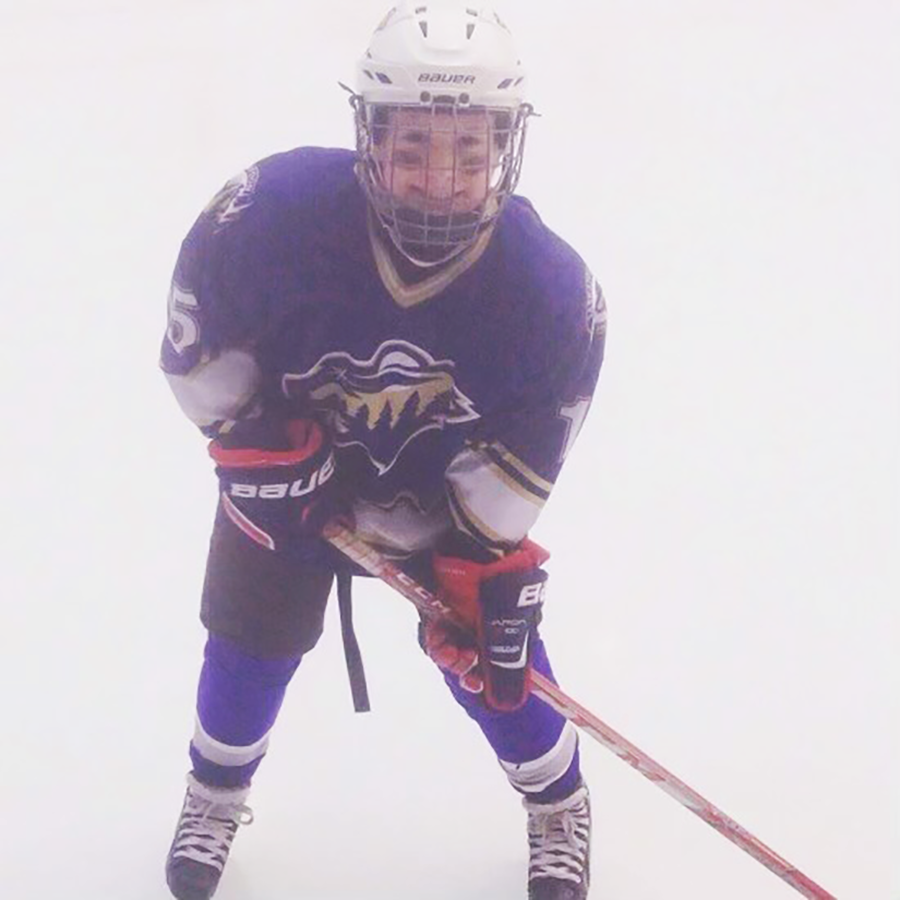
The transition from grassroots to high-performance hockey came with the Under-15 AA Saskatoon Stallions, when Chadwick began to take a proactive approach to his mental performance.
“I saw a lot of NHL players and elite athletes, in general, were starting to publicly announce they were working with sports psychologists and making it a priority in their lives to develop their mental skills,” Chadwick said.
“I looked at my own journey and thought that would be a great option for me and would give me an edge … and I'm very happy I took that step. It's definitely one of the biggest assets I have right now, and I see it all the time in pro.”
When asked what he’s most proud of beyond making it to the professional level, Chadwick highlighted his resilience when faced with adversity, like being injured prior to the 2020 Western Hockey League (WHL) Prospects Draft.
“It always sucks to get cut, any setback, or injury. It sucks, there's no doubt about it … But it was about, ‘OK, get right back on the horse and continue working,’” Chadwick said.
“Injuries as well. I broke my arm when I was 14 going into my bantam draft year. I was again like, ‘oh crap, this is a huge deal.’ But obviously it’s not in the moment … Starting mental skills training is definitely what helped me handle those situations.”
Chadwick also recalled not making the Lethbridge Hurricanes roster in his first year of major junior eligibility.
“I desperately wanted to make the Hurricanes … and ultimately was cut right at the end. That was pretty disappointing, but it was a good opportunity for me to step back and go, ‘OK, what's working for me, what's not working for me, and what can I do right now,’” Chadwick said.
“I got good feedback from the coaches and the management at Lethbridge … It's not about changing when things go wrong. It's like a stock: you own a stock for 30 years, it's going to do well. I just continued what I'm doing; I didn't have to change it because I got a bad result.”
His hard work paid off, as he went on to play the next three seasons with the Hurricanes and was even named the franchise’s 32nd captain.
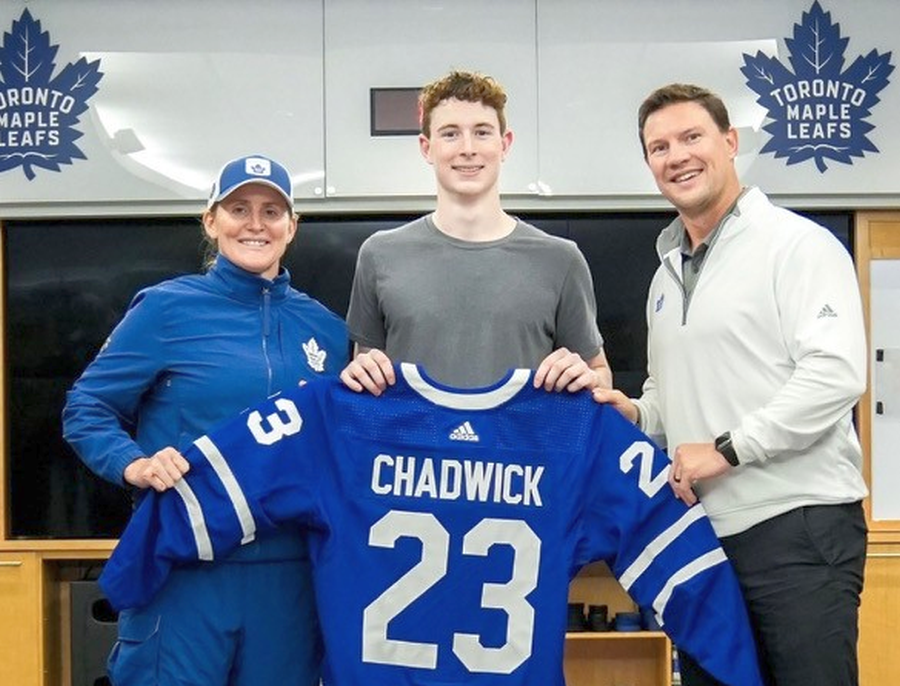
But even after being selected in the 2023 NHL Entry Draft by the Toronto Maple Leafs, the defenceman’s approach to challenges emphasizes consistent reflection and learning.
“I want to make the NHL and same thing happened, I got cut [by the Maple Leafs] this year. It's not the end of the world. Same sort of mindset, just continue building my habits and be a lifelong learner. People want to work with those that are always wanting to learn,” Chadwick explained.
“What can I do to improve my game? What am I seeing in these professionals day in and day out, and how they approach their preparation, that I can adopt? … It's never, ‘Maybe I'm not good enough right now,’ but I will get there. That belief in myself.”
Mental Performance Consultant Kyle McDonald, who has worked with Chadwick, said developing these types of mental skills early can make a significant difference for players.
“When we think about development, it doesn’t mean stress goes away. It means we get better at managing it. I’m talking about competitive stress, as opposed to life stress and outside the game,” McDonald said.
“There’s stress, and it doesn't go anywhere. The more you learn how to manage it, the better … In anything you do in life.”
From self-talk to visualization, Chadwick has developed a toolbox of mental strategies to allow him to remain calm, focused, and adaptable under pressure.
“It was about building a foundation. How do I start building my self-talk, my visualization, and what habits do I want to do day in and day out? Just building self-awareness. Now, I've built that foundation and continue to put layers on it,” Chadwick said.
“Mental toughness is about being resilient and doing it consistently over the long term. Anyone can be mentally tough once, but how can you do that over the course of the season? … Build self-trust within yourself. That's something I continue to work on, and it's also a top priority.”
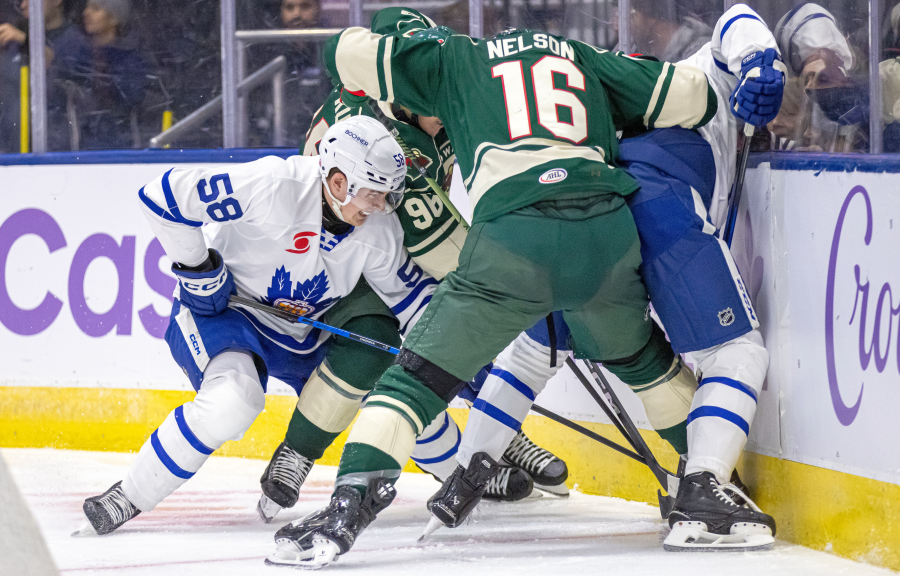
McDonald noted that introducing habits like visualization early can have lasting benefits for athletes.
“That’s neuroscience at its best. You’ve created this pathway in your brain. Now your brain, when it’s actually in that moment, acts like, ‘I’ve been there before, and I’ve been there so many times,’” McDonald said.
“If you do it at a young age, you accumulate those habits. A kid starting at 10, 11, 12 years old, by the time they're 15 or 16, if they spend two or three minutes a day visualizing that retrieval and first pass, it becomes a habit.”
Among the key differences between professionals and amateurs, Chadwick emphasized consistency and hard work.
“Talent is overrated. I’ve seen a lot of very talented players without the best work ethic. I’ve seen a lot of those guys not play a game past junior or never make it to junior,” Chadwick said.
“The guys that work hard consistently, those are the people who tend to make it. At the end of the day, I want to do whatever I can to make it, regardless of talent. I’m not going to allow somebody else to outwork me.”
As part of Hockey Saskatchewan’s Building Resiliency in Today’s Youth Through Sport webinar series, Chadwick’s story shows that resilience grows through adversity, reflection, and commitment to personal development.